Rovo
Enterprise AI Assistant Implementation: Atlassian Rovo Deployment Strategy
Complete guide to implementing Atlassian Rovo AI assistant in enterprise environments with deployment strategies, security frameworks, and agent automation.
The Enterprise AI Revolution is Here
Atlassian Rovo has fundamentally changed how organizations access, learn from, and act upon their enterprise knowledge. As an AI-powered solution that breaks down information silos across Jira, Confluence, and 50+ third-party applications, Rovo represents the next evolution in enterprise AI assistants. However, successful implementation requires more than simply enabling features—it demands a strategic approach to deployment, security, and user adoption.
This comprehensive guide provides enterprise architects, IT managers, and Atlassian consultants with proven frameworks for implementing Rovo effectively while maximizing ROI and maintaining organizational security standards.
Understanding Rovo's Enterprise Architecture
Core Components and Capabilities
Rovo operates through three integrated platform applications that work seamlessly together:
Rovo Search delivers personalized, AI-powered enterprise search across your entire technology stack. Unlike traditional search tools confined to single applications, Rovo Search provides unified access to information from Jira, Confluence, Slack, Google Drive, SharePoint, and dozens of other connected applications.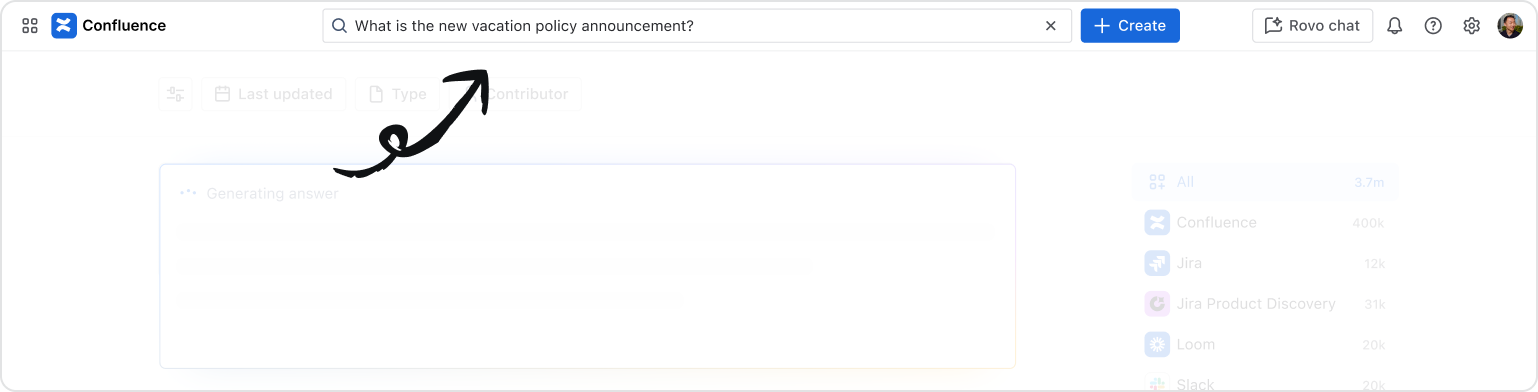
Rovo Chat functions as an intelligent AI teammate that understands your organization's context, terminology, and relationships. It delivers contextual answers drawn from your entire enterprise ecosystem while respecting existing permissions and access controls.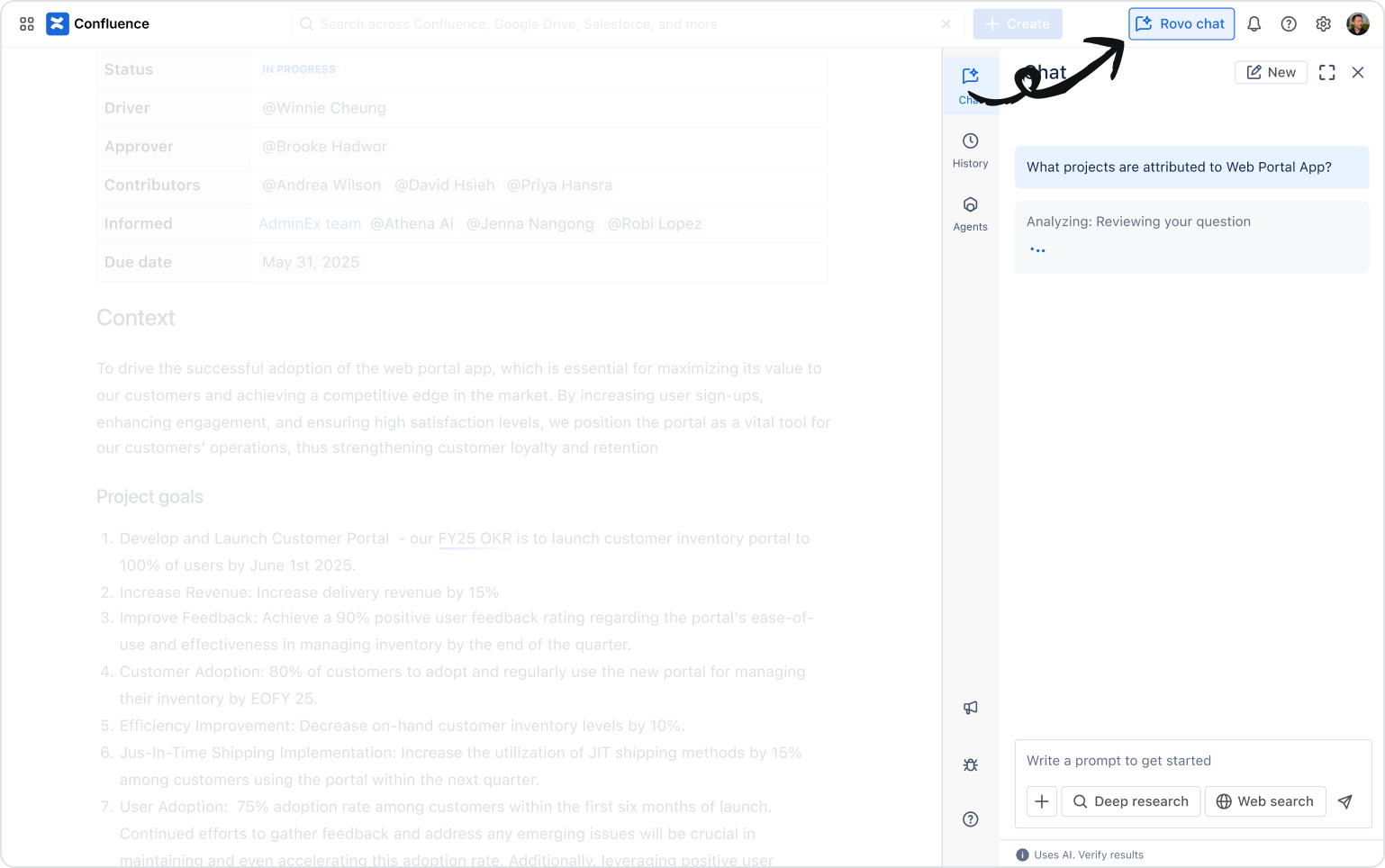
Rovo Studio enables creation of custom AI agents through both no-code interfaces and developer-focused Forge platform integrations. These agents automate routine tasks, generate content, and provide specialized assistance tailored to your workflows.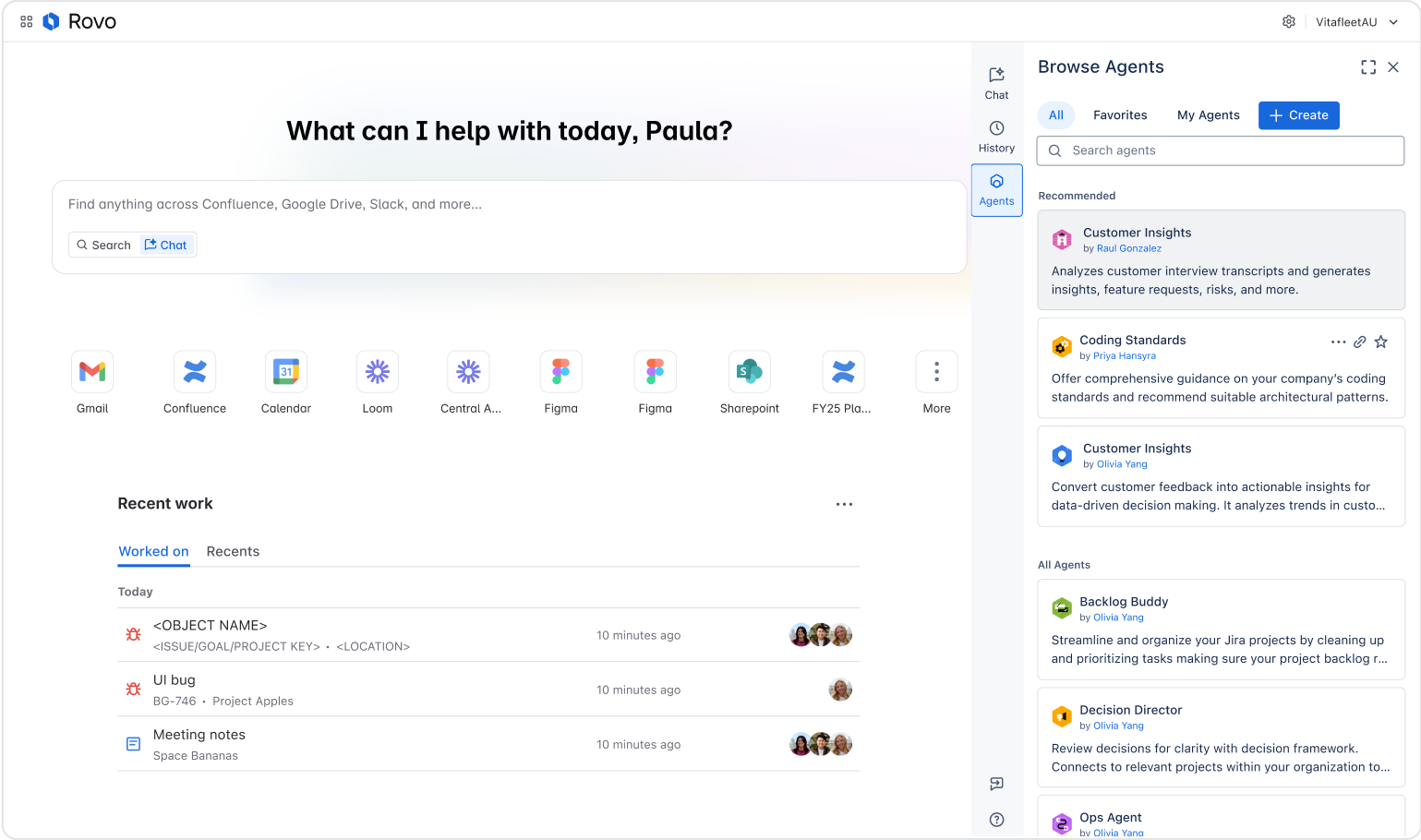
The Teamwork Graph Foundation
The power behind Rovo lies in Atlassian's proprietary Teamwork Graph—a sophisticated data model built on two decades of collaboration research. This graph understands relationships between people, projects, and knowledge across your organization, enabling Rovo to deliver increasingly relevant results as it learns your team dynamics and organizational structure.
Strategic Implementation Framework
Phase 1: Assessment and Planning
Current State Analysis Begin by evaluating your organization's AI maturity level and identifying specific use cases where Rovo can deliver immediate value. Document existing information silos, common search frustrations, and repetitive tasks that could benefit from automation.
Security and Compliance Review Rovo maintains SOC 2 and ISO 27001 certification while supporting GDPR compliance. However, organizations must review their existing permissions structures across Atlassian and third-party tools before enabling Rovo to ensure sensitive data remains properly restricted.
Stakeholder Alignment Secure leadership buy-in by demonstrating Rovo's potential impact on productivity and decision-making speed. Position Rovo as an evolving capability rather than a static solution, emphasizing its ability to grow with your organization's needs.
Phase 2: Controlled Rollout Strategy
Pilot Program Design Start with a small, well-defined user group from a single department or project team. This allows you to validate Rovo's effectiveness in your specific environment while minimizing risk and gathering valuable feedback.
Data Source Integration Begin with core Atlassian products before expanding to third-party connectors. Prioritize applications containing the most frequently accessed information to demonstrate immediate value. Create blocklists for sensitive data sources that should remain excluded from Rovo's indexing.
Agent Development Strategy Focus initially on pre-built agents for common use cases like IT support ticket management, sprint reporting, or release notes generation. Avoid the "blank canvas problem" by starting with proven templates before building custom solutions.
Phase 3: Scale and Optimization
Organization-wide Deployment Expand access systematically across departments while monitoring usage patterns and performance metrics through Rovo's analytics dashboards. Track adoption rates, search success rates, and agent utilization to identify optimization opportunities.
Custom Agent Development Leverage insights from the pilot phase to build specialized agents addressing your organization's unique workflows. Use both no-code Rovo Studio interfaces for business users and Forge platform capabilities for complex integrations requiring developer expertise.
Continuous Improvement Establish feedback channels and regular reviews to refine agent behaviors, update data connections, and expand Rovo's capabilities based on evolving organizational needs.
Security and Governance Best Practices
Data Protection Framework
Rovo implements multiple security layers to protect enterprise data:
- Encryption: All data transmissions use SSL encryption with inputs and outputs processed in-memory and immediately discarded
- Permission Inheritance: Rovo respects existing user permissions, ensuring individuals only see content they're authorized to access
- Data Residency: Supports geographical data pinning to comply with local data protection regulations
- Audit Logging: Comprehensive tracking of all Rovo activities for compliance and security monitoring
Risk Mitigation Strategies
Implement governance zones similar to Shell's framework, adapted for generative AI use cases. Establish clear risk assessments for agent development, particularly when enabling citizen development capabilities. Create approval workflows for custom agents that access sensitive data or perform critical business functions.
Monitor LLM provider relationships carefully—while Rovo ensures providers don't store or train on your data, maintain awareness of which models are being utilized and their compliance with your security standards.
Agent Automation Excellence
Strategic Agent Selection
Focus on agents that deliver measurable productivity gains rather than pursuing automation for its own sake. Successful implementations typically start with these high-impact use cases:
IT Service Management: Automate ticket triage, password reset workflows, and common troubleshooting procedures Agile Development: Generate sprint summaries, organize backlogs, and create release documentation Knowledge Management: Convert meeting transcripts into actionable summaries and maintain documentation standards Customer Support: Categorize feedback, escalate urgent issues, and generate response templates
Custom Agent Development
When building custom agents, treat them like team members who need clear guidance and boundaries. Provide detailed instructions about communication tone, escalation procedures, and scope limitations. Test agents thoroughly in sandbox environments before production deployment.
Document agent capabilities and limitations clearly to manage user expectations and facilitate maintenance. Include troubleshooting guides and contact information for technical support when agents encounter edge cases.
Overcoming Common Implementation Challenges
The Walled Garden Limitation
While Rovo excels within the Atlassian ecosystem, its ability to perform actions in third-party applications remains limited compared to reading data from them. Plan integration strategies accordingly, potentially supplementing Rovo with other automation tools for cross-platform workflows.
Cost Management and ROI
Rovo's bundling into Premium and Enterprise plans requires careful cost-benefit analysis. Track metrics like time savings, search success rates, and automation efficiency to demonstrate ROI. Monitor usage quotas for Objects and Requests to avoid unexpected overage charges when they're implemented.
User Adoption and Training
Combat the "blank canvas" problem by providing structured learning paths and real-world examples rather than generic AI training. Create internal champions who can demonstrate practical applications and share success stories. Maintain updated knowledge bases reflecting the latest Rovo capabilities and organizational best practices.
Measuring Success and Optimization
Key Performance Indicators
Track both quantitative and qualitative metrics to assess Rovo's impact:
- Search Efficiency: Average time to find information, search success rates, user satisfaction scores
- Agent Utilization: Frequency of agent interactions, task automation rates, error reduction metrics
- Productivity Gains: Time savings on routine tasks, faster decision-making cycles, reduced information requests
Continuous Improvement Process
Establish regular review cycles to evaluate agent performance, user feedback, and organizational needs evolution. Update agent instructions based on real-world usage patterns and emerging requirements. Expand data connections as new tools are adopted and business processes change.
The Future of Enterprise AI Assistance
Atlassian continues developing Rovo's capabilities with enhanced forecasting features, expanded third-party integrations, and improved citizen development tools on the roadmap. Organizations that establish strong foundational practices now will be well-positioned to leverage these advanced capabilities as they become available.
The most successful Rovo implementations combine technical excellence with cultural change management. By treating AI as a collaborative partner rather than a replacement technology, organizations can create sustainable competitive advantages through enhanced knowledge accessibility and intelligent automation.
Ready to transform your organization's approach to enterprise knowledge management? Start with a focused pilot program, prioritize security and governance from day one, and build momentum through demonstrated value rather than technological novelty. The future of work isn't about replacing human intelligence—it's about amplifying it through strategic AI partnership.